

Closing the Loop Between Your POS and Your Margins
In June, we introduced BOM (Bill of Materials) and recipe management to AirPurchase, giving operators a structured way to define what goes into every dish and what it costs. That was the first half of the equation. Knowing your theoretical cost per plate is useful, but it only becomes actionable when you can measure it against what actually sells and what actually gets consumed. Today, we're closing that loop with POS integration, and we're starting with our partner Eats365.

Editorial Team
Sep 14, 2026 · 3 min read
The Connection That Changes Everything
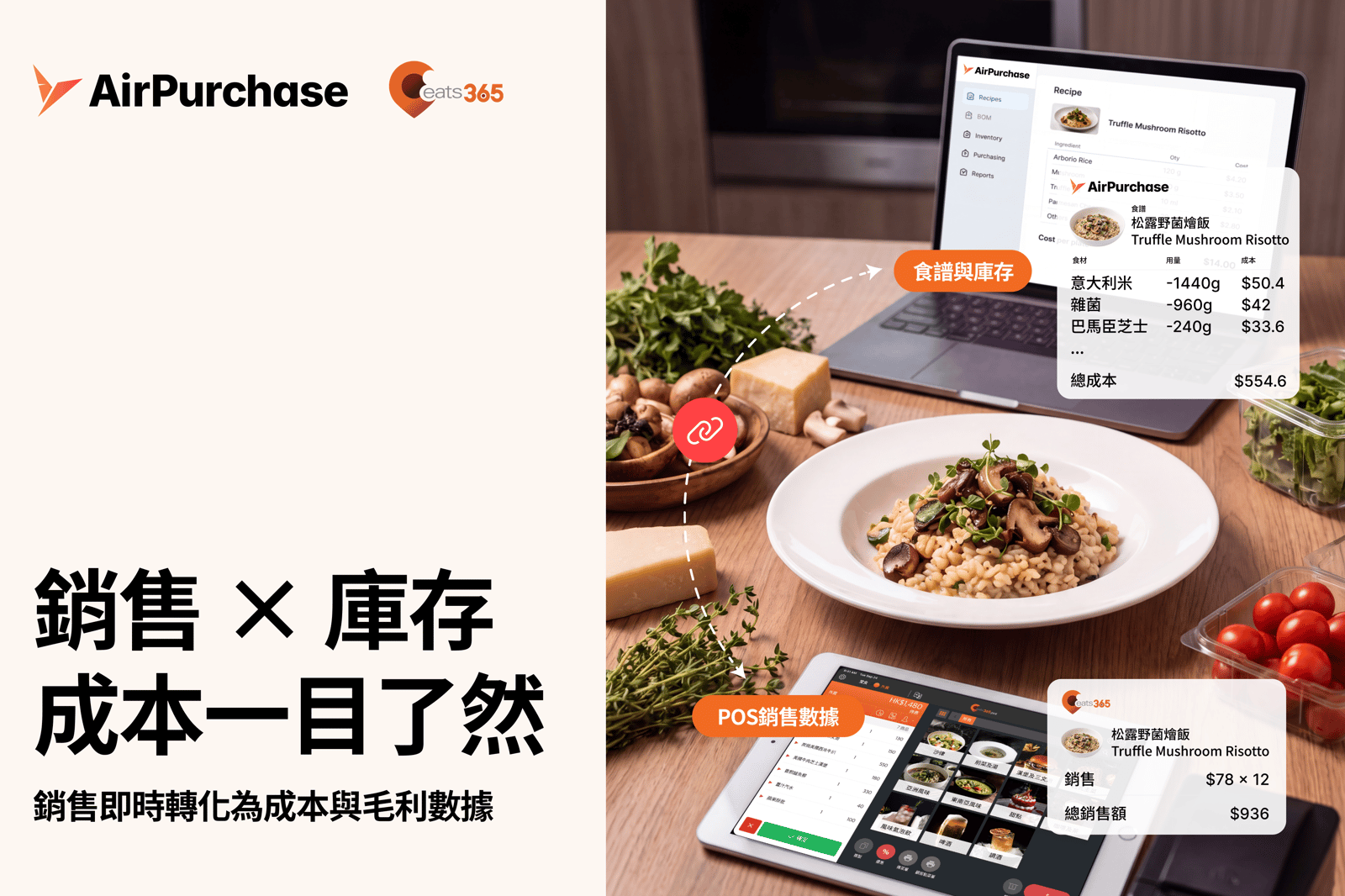
In June, we introduced BOM (Bill of Materials) and recipe management to AirPurchase, giving operators a structured way to define what goes into every dish and what it costs. That was the first half of the equation. Knowing your theoretical cost per plate is useful, but it only becomes actionable when you can measure it against what actually sells and what actually gets consumed. Today, we're closing that loop with POS integration, and we're starting with our partner Eats365.
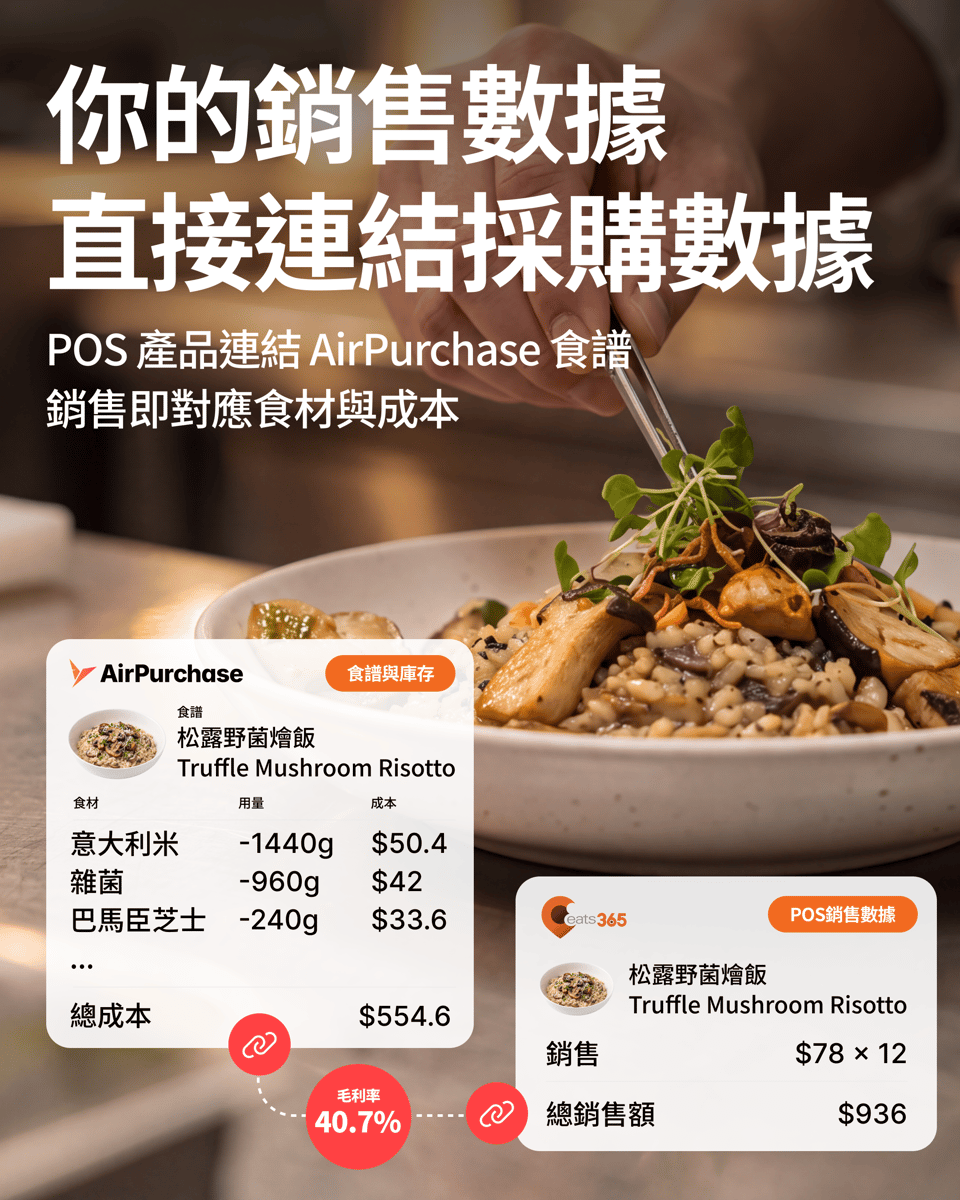
A recipe defines intent: this dish should use this much of these ingredients, at this cost. A POS records reality: this many dishes sold, on these days, at these prices. On their own, each tells only part of the story. By linking the products on your POS to the recipes configured in AirPurchase, the two systems begin to speak the same language. Every sale recorded maps back to its underlying ingredients and cost structure, then, they answer the questions operators actually care about —— where the margin leaks?
Where the Margin Actually Leaks
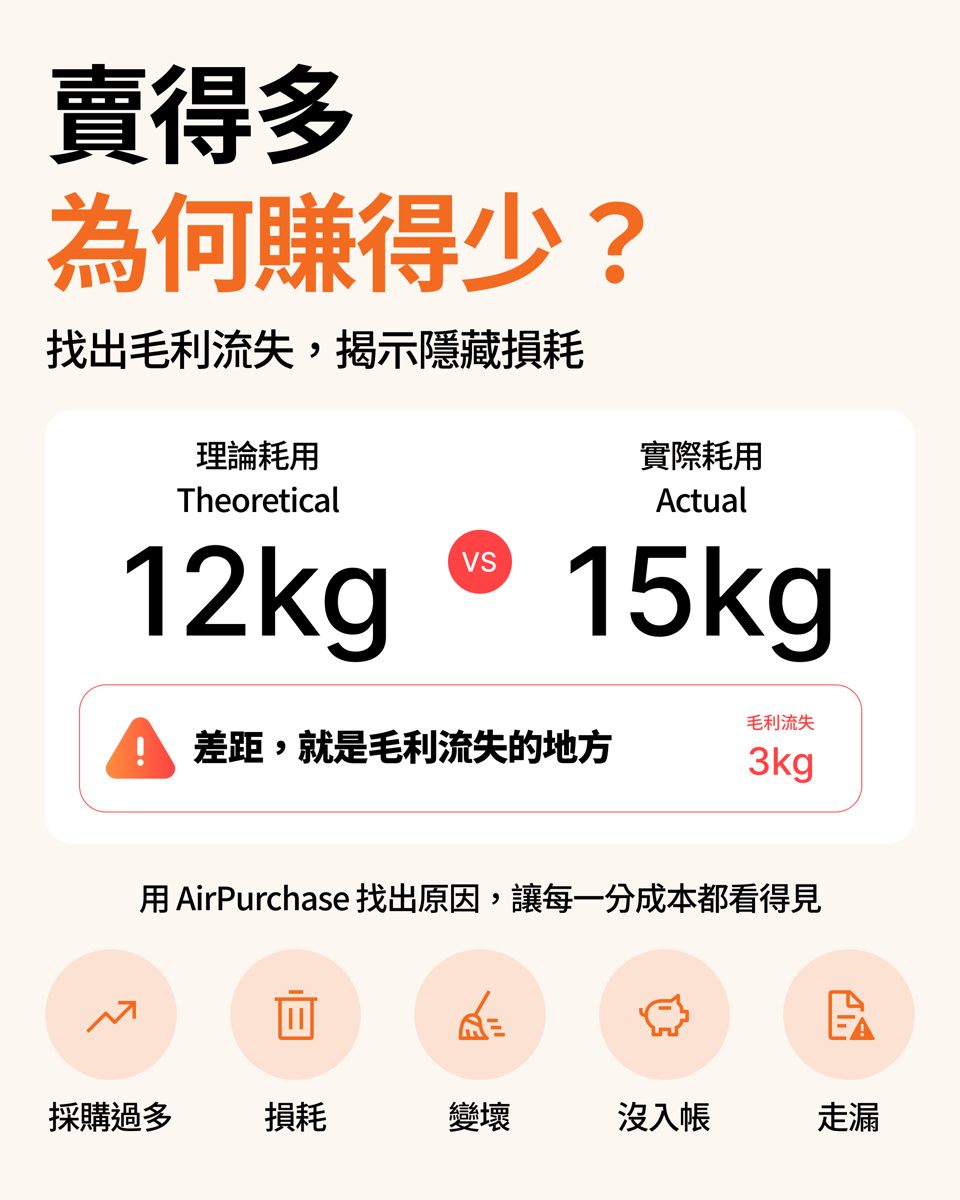
Knowing your margin per dish is one thing. Knowing why it doesn't match what you expected is another, and this is where the integration earns its place. The system compares theoretical consumption (what your recipes say you should have used, based on sales) against actual consumption (what your inventory records show you did use). The gap between the two is where margin leaks: over-portioning, waste, spoilage, unrecorded staff meals, or shrinkage. Surfacing that variance clearly, quantity by quantity, turns a vague sense that "food cost feels high" into a specific, addressable number.
From Best-Selling to Best-Performing
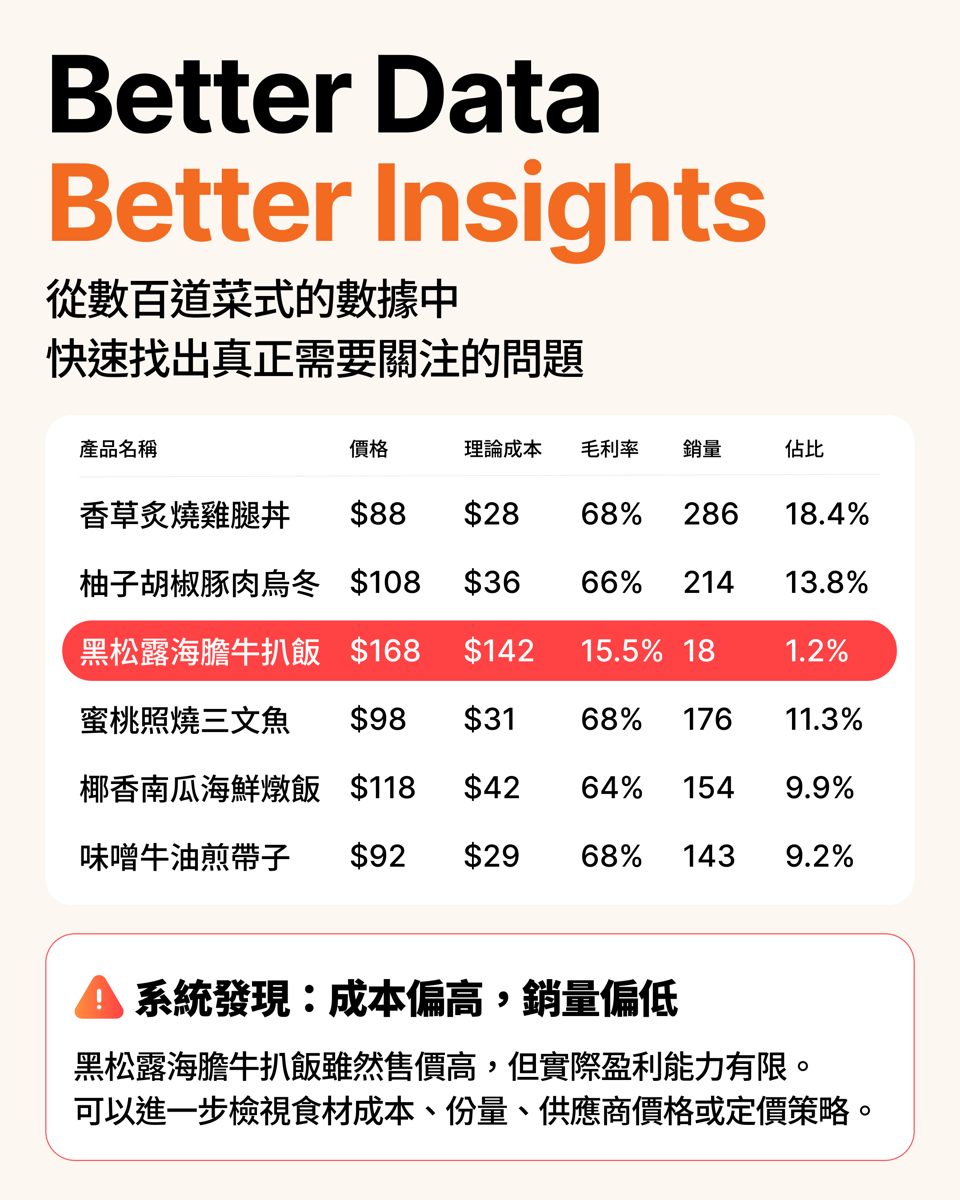
Sales reports tell you what's popular. They rarely tell you what's profitable, and the two are not always the same. A high-volume dish sold at a thin margin can quietly underperform a slower-moving item with healthier economics. Once recipes are tied to POS data, revenue and cost sit side by side at the dish level, and gross margin stops being a monthly spreadsheet exercise and becomes a live figure. You can see which items carry your profitability, which ones drag on it, and how menu changes or supplier price movements ripple through your margins, all without manual reconciliation.
From Sales to Shelf, Automatically
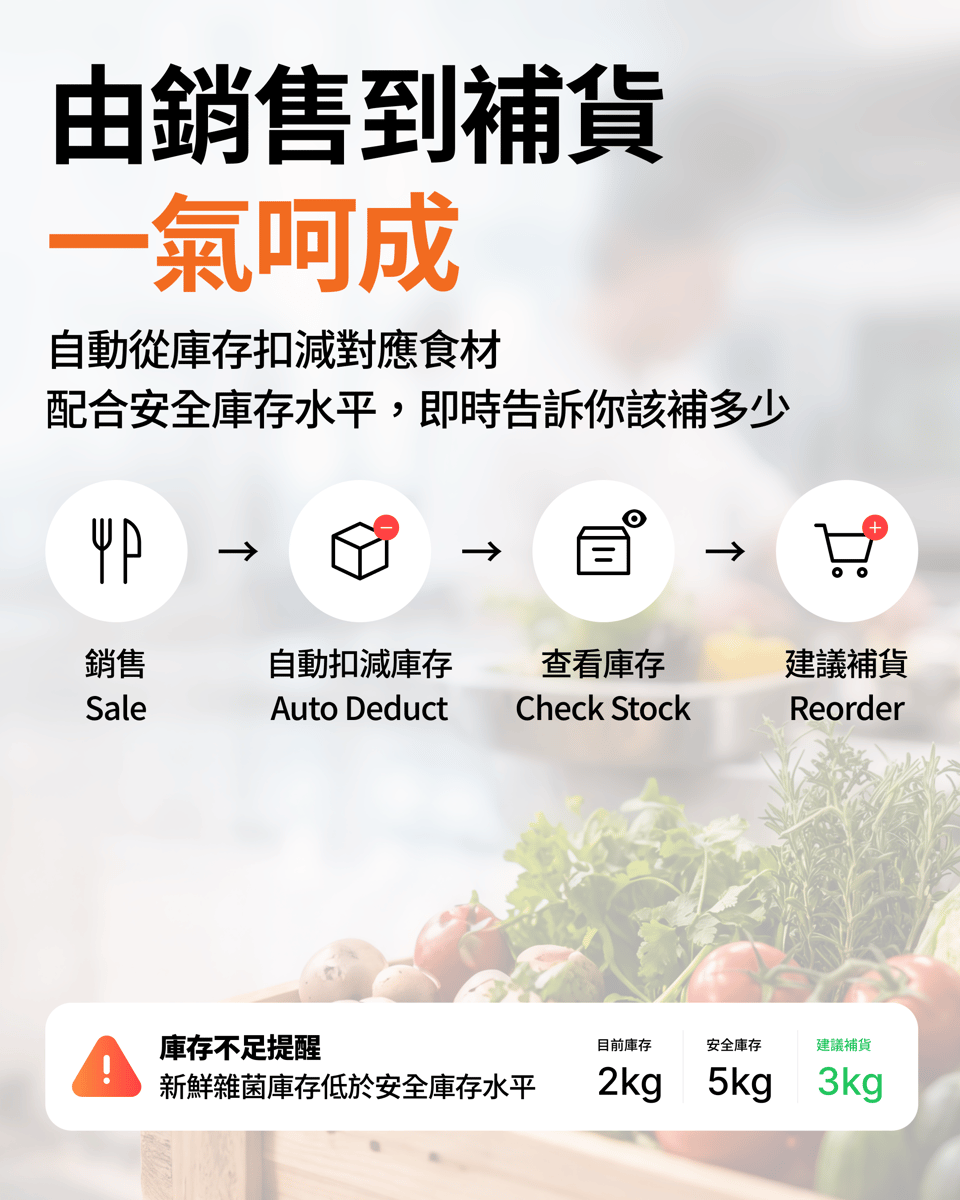
There's a practical consequence to all this that plays out on the ground, not just in the reports. Because each sale maps back to its recipe, so the system deducts the corresponding ingredients from stock the moment a dish is sold, no manual tallying after close. Set against your par levels, that live stock count tells you exactly how much to reorder and when, and surfaces a shortage the instant it happens, rather than leaving a station to discover it's run dry once service is underway. Purchasing rests on what's actually on the shelf, not on guesswork and memory.
The Bigger Picture
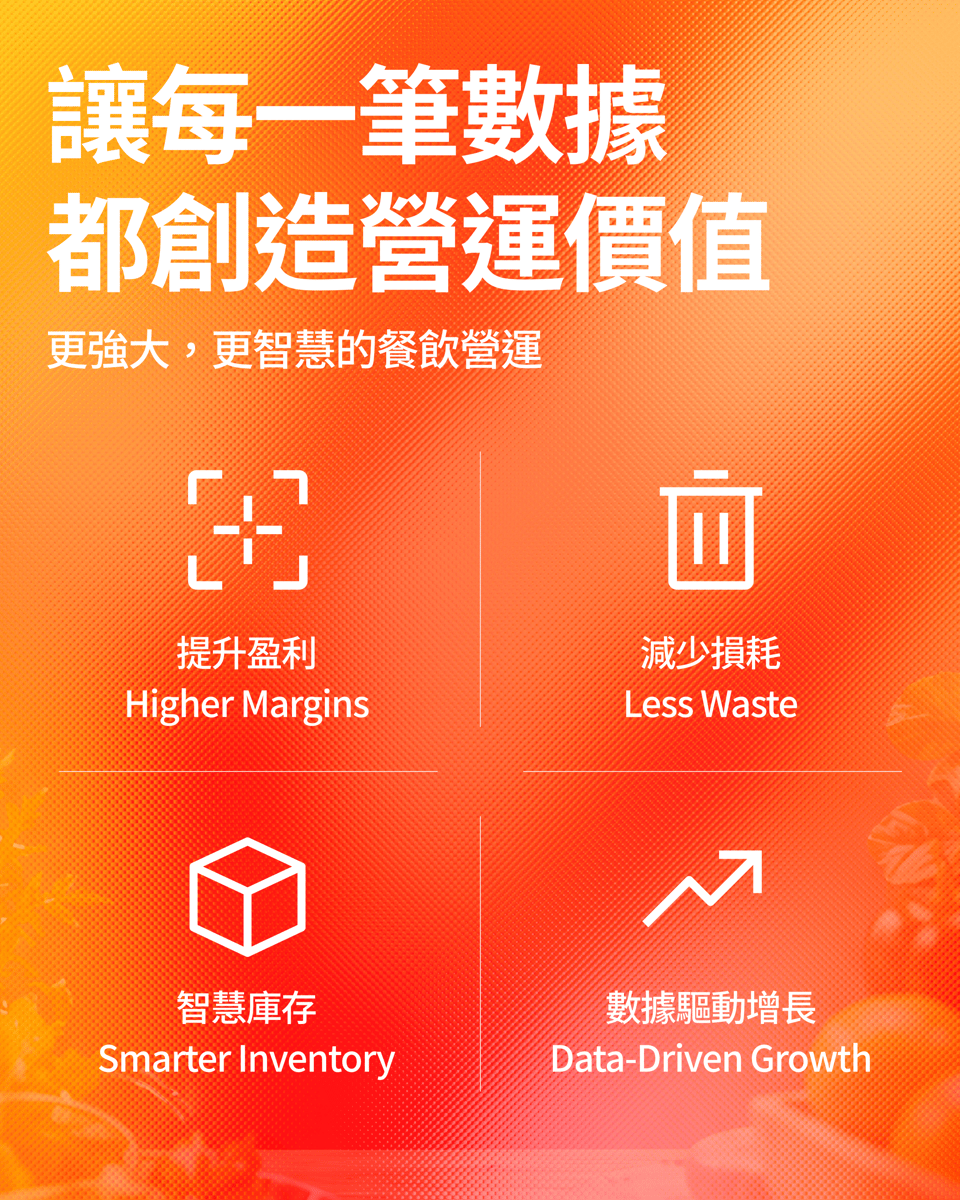
Individually, POS systems and inventory tools each solve a piece of the operational puzzle. The value here isn't in either system alone, it's in the connection between them. Margin management has historically been reactive: you find out how a period went after it's over. Linking the sales item to the recipe moves that visibility closer to real time, so decisions about pricing, portioning, and purchasing can be made on evidence rather than instinct.
The BOM feature gave operators a way to define their costs. The POS integration gives them a way to hold reality up against that definition, and act on the difference.
Tags
Related stories
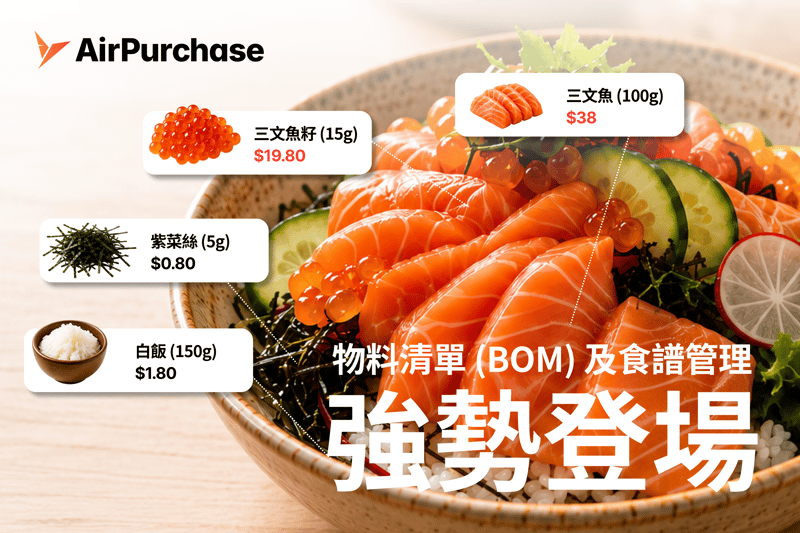
Master Your Margins: Unveiling the Recipe & BOM Management Experience
Introducing Bill of Materials and Recipe Management — dynamic cost tracking, multi-supplier ingredient linking, and a Recipe Playground to engineer profitability before going live.
Editorial Team
Jun 10, 2026 · 3 min read

AirPurchase on HoyTV & i-CABLE: AI That Actually Works in a Real Kitchen
AirPurchase was featured on Episode 24 of i-CABLE News' 智創未來 (Innovating the Future), with General Manager James Yip and clients Sushi Raku and Top Blade Steak Lab demonstrating how AI procurement is transforming real restaurant operations in Hong Kong.
Editorial Team
Jun 13, 2026 · 3 min read

Striking the Perfect Balance: How All-You-Can-Eat Restaurants Avoid Stockouts and Food Waste
MasterBeef, a premium Wagyu AYCE hotpot brand, uses AirPurchase to manage overseas procurement lead times and keep ingredient costs under tight control — without ever running short.
Editorial Team
May 4, 2026 · 4 min read